Copland wrote Fanfare for the Common Man in 1942, for a country at war with a theology that denied the common man entirely. It became the sound of an American century that promised the opposite: that ordinary people, in ordinary numbers, would build extraordinary futures.
We want to tell that story honestly, on the façade of a building that has watched it happen.
The common man moved outward. He walked west until the continent ended. He built upward when the land ran out. Steel, rivet, river, rail. Cities you could see from the moon. Then the screens came, and he stopped walking altogether. He went inward. Macro to micro.
And while he was in there, someone else was in the room.
His attention was the harvest. His data was the product. His future became a ledger owned by people who had never built anything at all.
It resolves. It was written in a dark year, for a darker year to come, and still it insists on a final chord that opens outward. Brass, held, unafraid.
Our piece does the same.
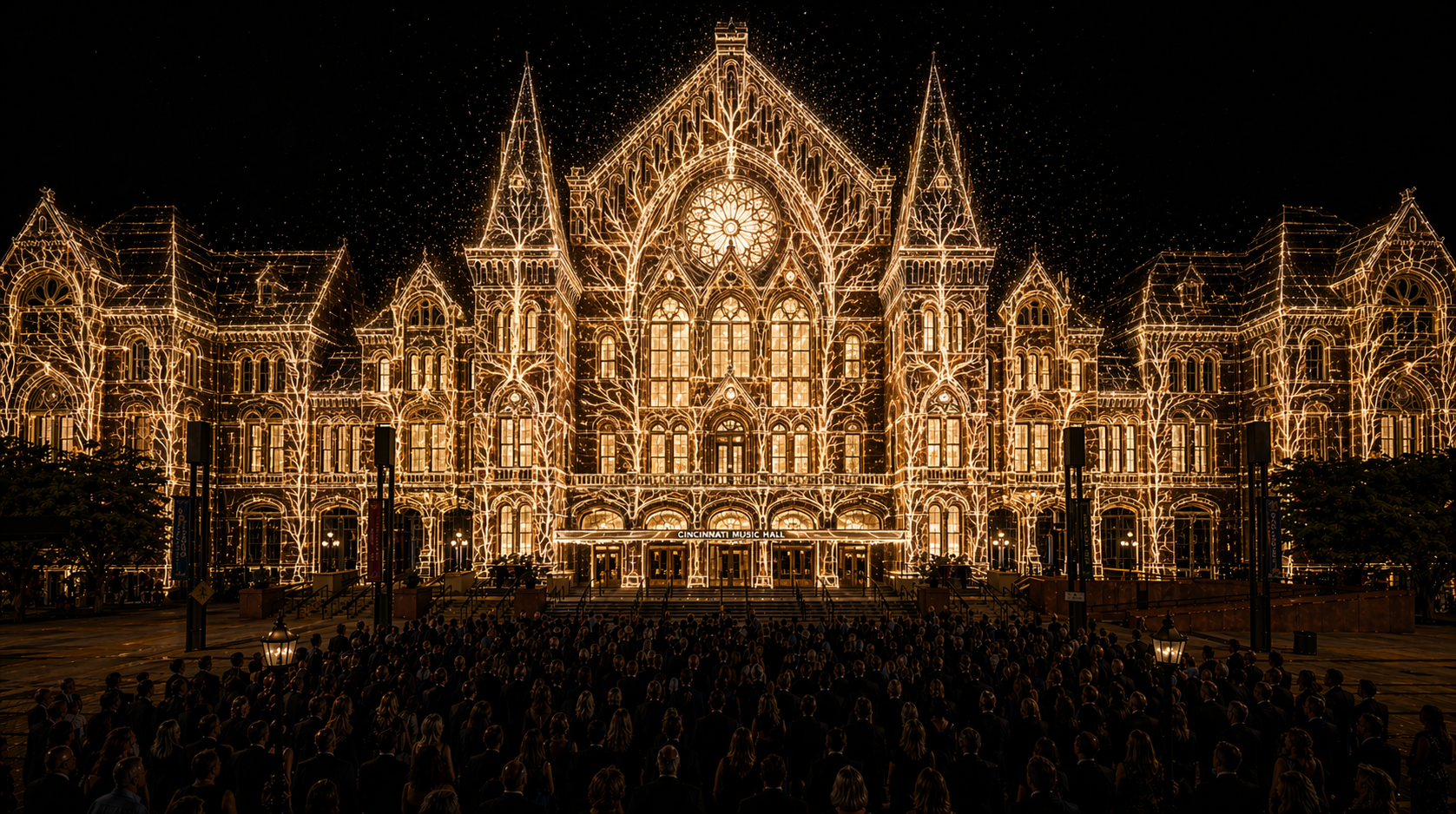
The data collapses into a singularity, and then it exhales. Not into a corporation. Not into a cloud. Back into the building that has stood on this corner of Cincinnati since 1878. Back into the brick, the limestone, the crowd assembled below the façade.
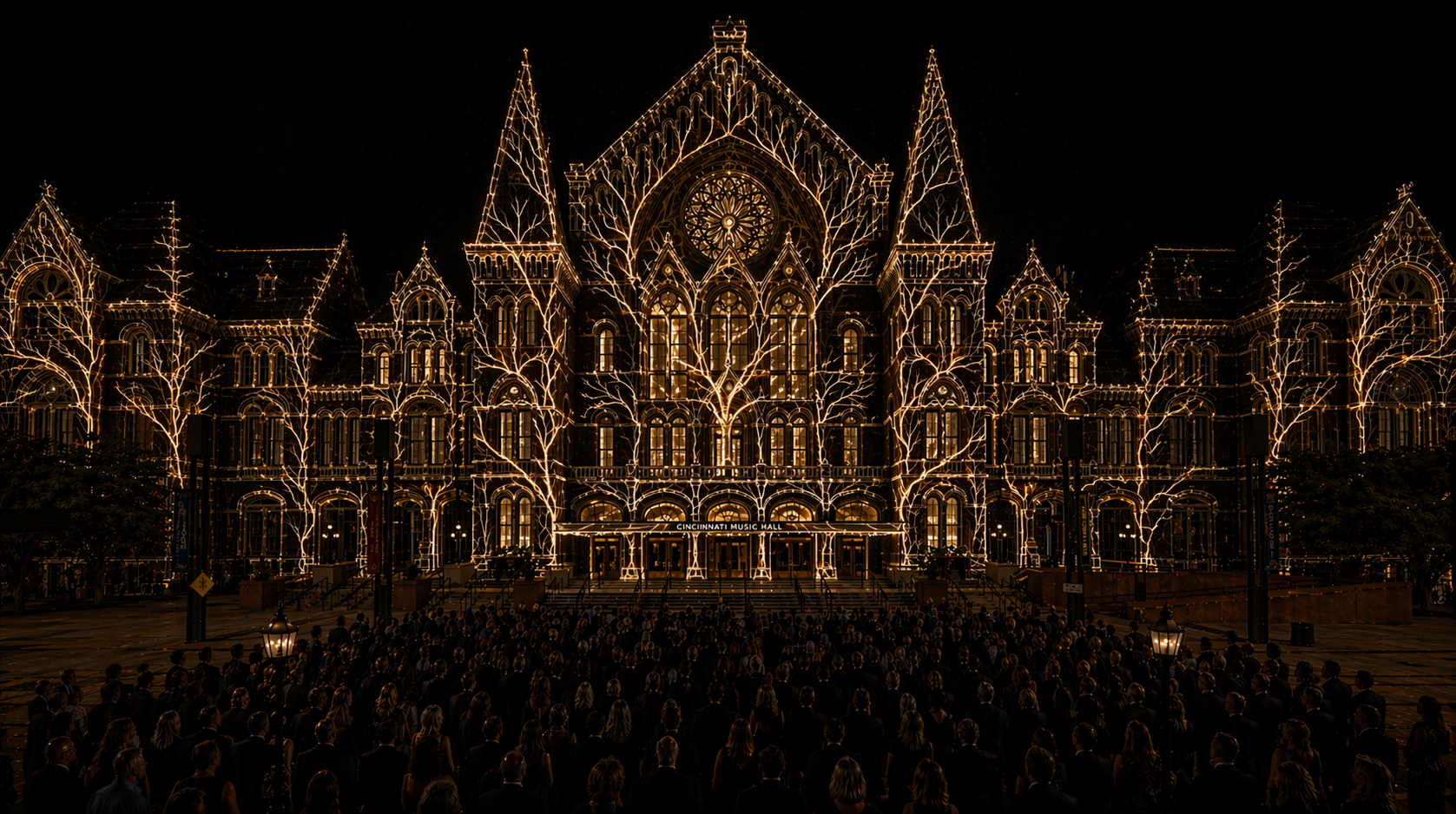
The final image is not a face. It is the architecture itself, re-blooming as a tree of light. Its branches trace the exact contours of Music Hall.
The common man is not an avatar. He is not content. He is the thousand people standing under the fanfare, looking up, together. He is still here. Copland's last chord is a fanfare for that moment.
Completed 1878. National Historic Landmark. Home of the Cincinnati Symphony Orchestra, the Cincinnati Pops, the Cincinnati Opera, and the May Festival.
The façade has been a civic mirror for 148 years. Our work is a three-and-a-half minute letter to the people standing in front of it.
Cincinnati Symphony Orchestra Recording · Runtime ≈ 3:20 · Loops nightly through BLINK
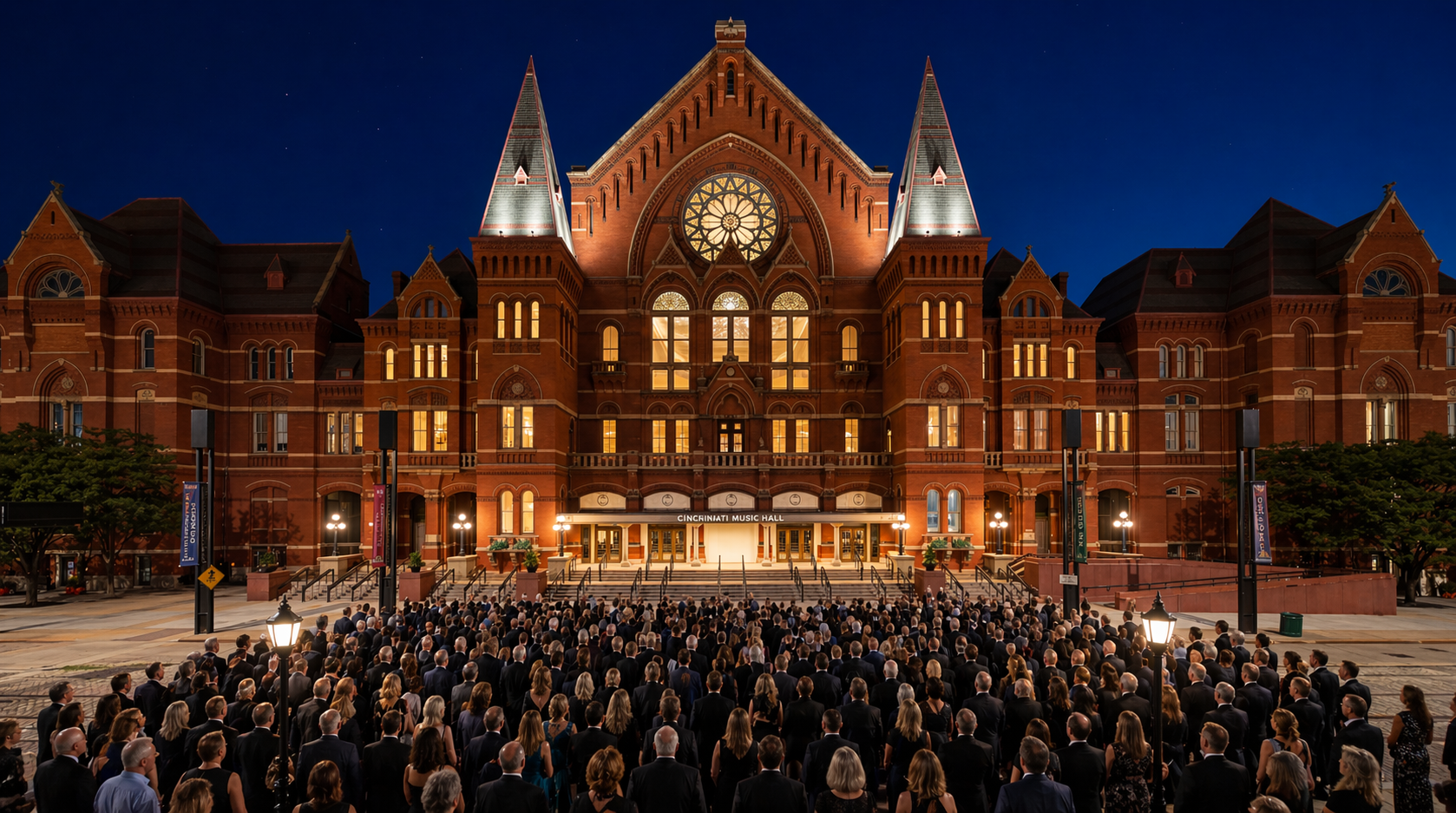
The façade opens as ceremony.
Warm ornamental light breathes slowly across the brick, as if the building were being remembered from the first time. A horizon glows behind the rose window. The piece begins the way a country begins: with a threshold, a warmth, a held breath.
The common man walks out of frame. He does not look back.
The first trumpets. The ground hardens.
The architecture begins to draw itself. The real brick is overlaid with its own lineage, line for line, a luminous wireframe that climbs the spires and extends them upward into a projected skyline. Every American century of building stacked into one elevation.
The architecture learns to build itself.
Night falls on the steel.
The windows of the hall light up one by one. CRTs, then phones, then a single unbroken screen. Electric veins climb the walls. Cold light replaces warm steel. Something quiet has happened.
The common man has stopped walking. He has stopped building with his hands.
The climax held. The façade inverts.
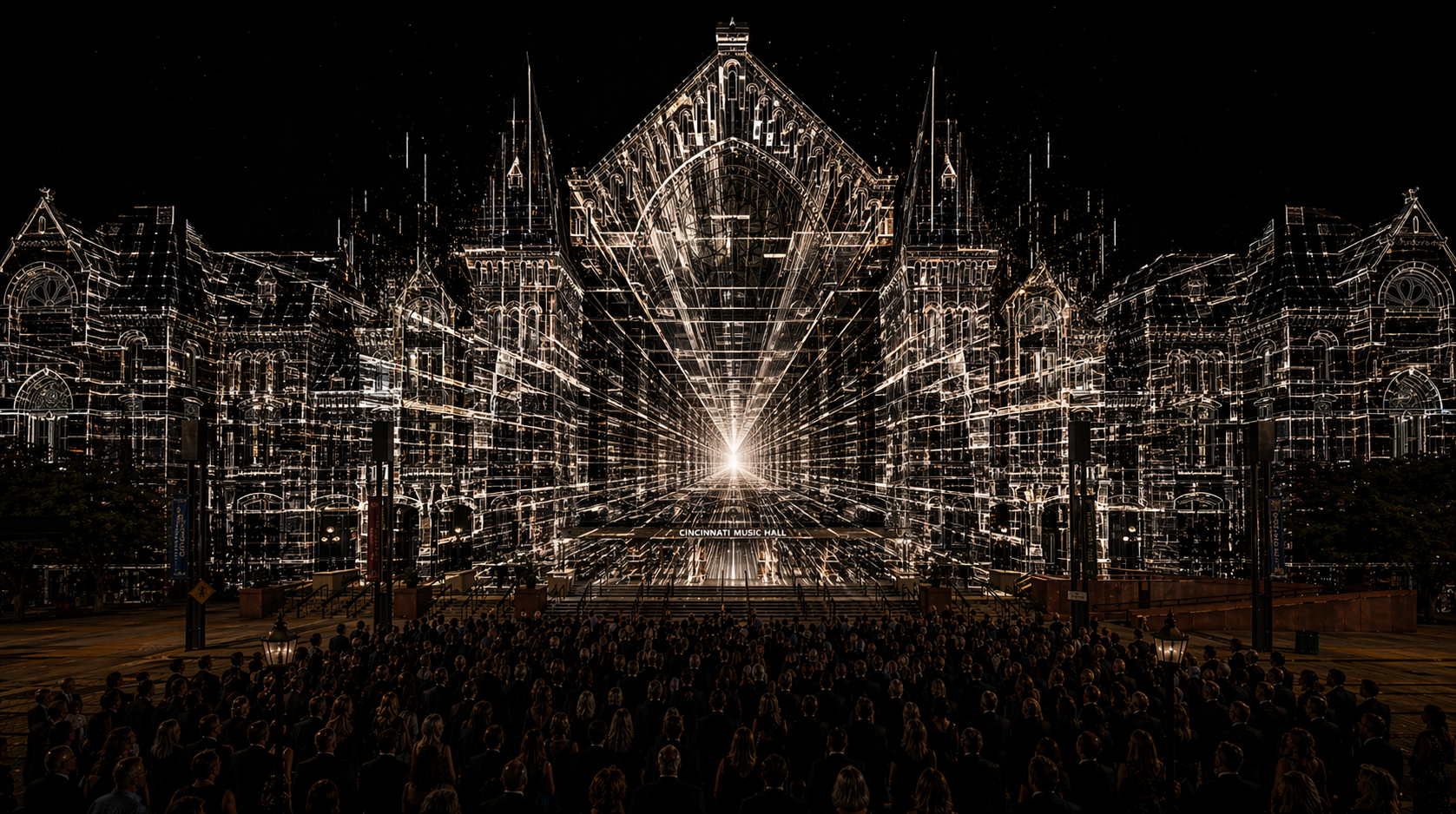
Music Hall becomes a one-point-perspective corridor that travels into itself: vanishing-point data, pixel-stream, singularity pull. Geometry collapses inward. The brick is gone. The sound is all brass.
The image is almost nothing.
The final chord. The singularity does not win.
Light-particles reverse. They do not reassemble into faces. They reassemble into a tree of pure light. Its branches trace every arch, window, and spire of Music Hall exactly. The building returns to itself. Specific. Luminous. Analog.
The common man is not on the wall.
He is in the crowd below, looking up.
Every projection element aligns to a real surface of Music Hall: an arch, a window, a spire, a sill. The architecture remains legible at all times. The piece reads as a conversation with the façade, not a film playing over it.
Horizon line · scaffold · circuit trace · vanishing point · branching tree. Each motif maps to one act, and each returns in Act V, reconciled.
Projected elements track to the hall's real contours. Spires extend spires. Arches fill arches. The rose window is treated as a protagonist, not a surface.
The façade holds architecture, landscape, light, and data. The human presence belongs to the crowd below. Real, physical, collective.
An audio-visual studio working at the intersection of music, philosophy, and large-scale projection.
Co-founded by Ian Simon and David Wexler. Based in Los Angeles.
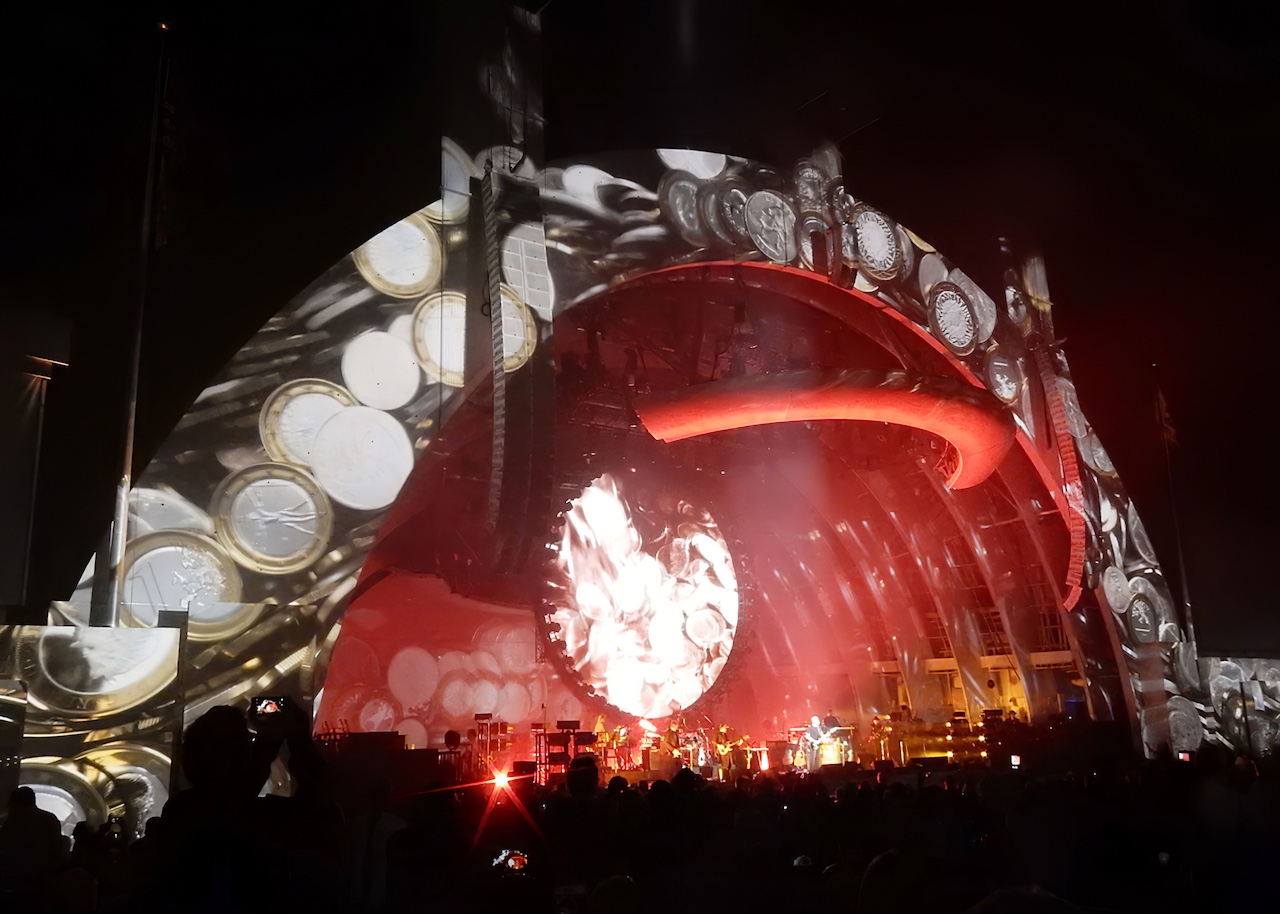
Our practice is built for public, architectural, large-format work. Pieces that treat buildings and stages as instruments rather than screens.
Full client list, case studies, and video documentation available at strangeloop-studios.com.
Six-month arc from proposal to premiere.